
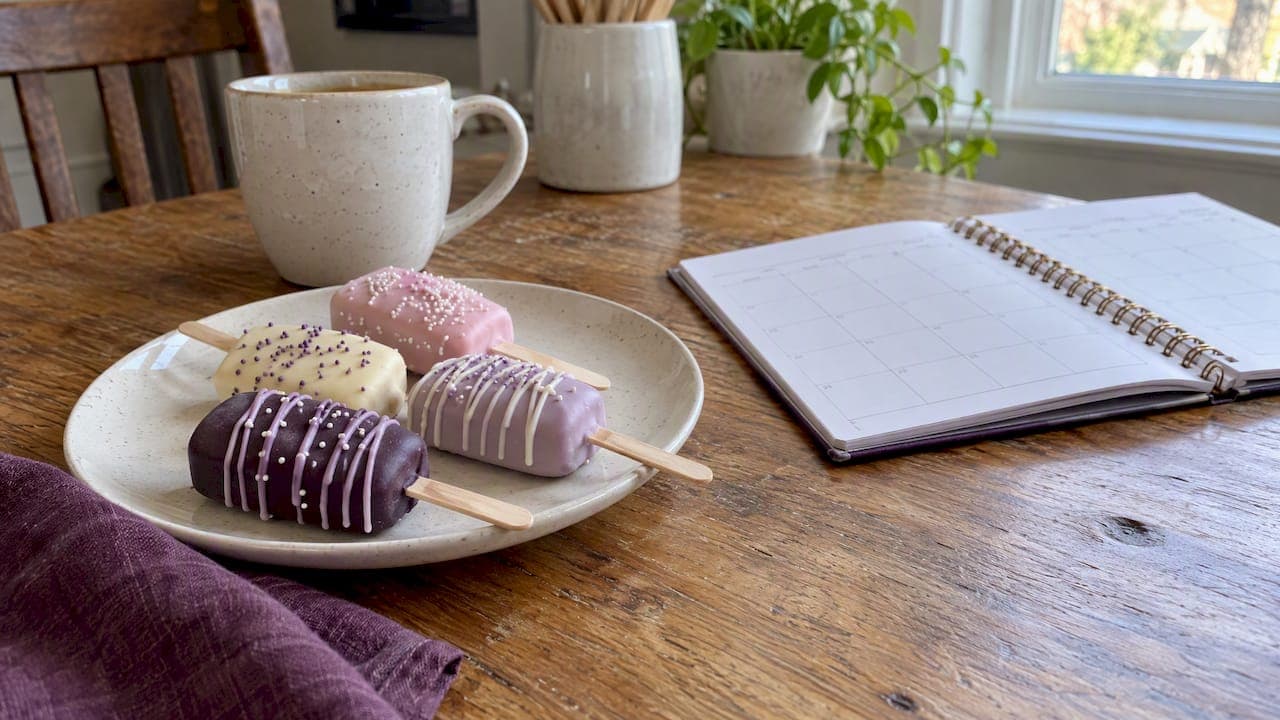
Small, standard orders can often come together within a few days if a baker has open slots. Medium orders with custom colours or piping usually need 1 to 2 weeks. Large or heavily customized orders, including weddings and corporate gifts, call for 3 to 6 or more weeks. A date is only locked once the order is confirmed and paid, and food-safety timing and a baker's production capacity both shape these windows.
TL;DR:
- Small standard batches may be ready in 48 to 72 hours if capacity is open, while medium custom orders need 1 to 2 weeks.
- Large, fully customized, wedding, or corporate orders need 3 to 6 or more weeks; only payment turns a tentative hold into a confirmed booking.
- Share the event date, exact count, design, packaging, allergen concerns, and pickup or delivery window early; weekend slots fill faster than weekday ones.
- Schedule pickup or delivery one to two days before the event when possible, since event day collection leaves little room for changes or delays.
- Keep finished cake pops containing eggs or dairy at 4°C or below and serve within 3 to 4 days; refrigerate cooked food within two hours.
Table of Contents
- Order timing by event size and customization level
- Baker production scheduling: lead time, capacity and confirmation steps
- Pickup, delivery and transit buffers
- Cake pop handling: chilling, dipping and set times
- Storage, refrigeration and food-safety timing for finished cake pops
- Packaging, counts and how they affect turnaround
- A compact order checklist and timeline planner
- How London's Sweets handles timeline-sensitive orders
- FAQ
- Sources
Order timing by event size and customization level
How far ahead you need to reach out depends on the size of your order and how much customization you want. A simple design on an open production day can sometimes be arranged in a couple of days, but anything with specific colours, flavours, or display work needs more runway.
- 48 to 72 hours: small, standard-design batches, when a baker happens to have short-notice capacity open.
- 1 to 2 weeks: medium orders, light custom colour themes, or simple piped details that take extra decorating time.
- 3 to 6 or more weeks: large batches, weddings, corporate events, or fully custom colour and flavour combinations that require sourcing specific materials.
A tentative hold is not the same as a confirmed booking. A hold simply reserves a production slot while details get finalized, but it can be released if another customer confirms and pays first. Reaching out early, even before every detail is settled, gives you a better shot at the date you want and leaves room to adjust the design later.
Baker production scheduling: lead time, capacity and confirmation steps
Most home-based bakers move through a predictable sequence once an inquiry comes in, and knowing the steps helps you supply the right information from the start.
- Inquiry: you share the event date, rough count, and style preferences.
- Quote and tentative hold: the baker checks capacity and gives a price range, sometimes holding the date briefly.
- Design mock-up: colours, flavours, and finish details get confirmed, often with a photo reference.
- Confirmation and payment: a deposit or full payment locks the date and converts the hold into a firm booking.
- Production: the batch is made close to the event to preserve freshness.
Bakers often cap same-day or next-day orders because decorating and packaging take real hands-on time, and weekend dates fill faster than weekdays since most events happen then. Giving an exact count, your packaging preference, any allergen concerns, and a clear pickup or delivery window up front speeds up the quote and confirmation process considerably. Final confirmation typically means payment has been received and the date is marked as booked, not just discussed.
Pickup, delivery and transit buffers
Scheduling pickup or delivery one to two days before the event, rather than the morning of, reduces stress for you and gives the baker a packaging buffer in case something needs a last-minute fix. It also means you are not relying on a tight same-day window if traffic or weather causes delays.
- Same-day or morning-of pickup can work for smaller orders, but it leaves no room to adjust if plans shift.
- Heat and humidity can soften coatings during transit, so warm-weather deliveries may need extra ice packs or insulated packaging.
- Confirm the exact delivery window, not just the date, especially if the venue has a narrow setup time.
- Ask what the contingency plan is if a delivery window is missed due to weather or traffic.
Coordinating dessert delivery alongside other vendors, such as wedding cocktail hour timing, can help you map out when each element of the event actually needs to arrive.
Cake pop handling: chilling, dipping and set times
Formed cake centres typically need a chilling period before dipping so they hold their shape in the coating instead of crumbling or sliding off the stick. Bakers generally give centres enough time in the fridge to firm up completely before the dipping stage begins.
After dipping, cake pops need time at room temperature to set before they are packaged or moved. Rushing this step risks smearing the coating or knocking off sprinkles and drizzle. Refrigerating cake pops immediately after dipping is usually avoided because the temperature change causes condensation on the coating, which dulls the finish and can affect the decoration.
For orders with longer lead times, bakers sometimes freeze the formed, undipped centres and finish dipping and decorating closer to the event date.
Pro Tip: If your event is more than a few weeks out, ask whether your baker freezes formed centres ahead of time, which lets finishing touches stay fresh for pickup.

Storage, refrigeration and food-safety timing for finished cake pops
Canadian food-safety guidance shapes how finished cake pops should be timed around an event. Health Canada advises that cooked food left at room temperature should be refrigerated within two hours, and refrigerated items containing eggs or dairy are best eaten within 3 to 4 days when stored at 4°C or below. That two-hour window matters for planning when cake pops should be set out at an event rather than left sitting on a table for hours beforehand.
Inspection Canada's survey of refrigerated ready-to-eat baked desserts found that the main safety concern is cross-contamination introduced during decoration steps added after baking, not the baked product itself. That is one reason individually wrapped cake pops and clearly labelled boxes make sense for transport and serving at events.
Practical steps for hosts include:
- Cool cake pops fully before boxing them for travel.
- Label boxes with the date made so you can track freshness.
- Keep refrigerated items at 4°C or below until close to serving time.
For more detail on timing windows and packaging, see our cake pop shelf life guide.
Packaging, counts and how they affect turnaround
Individual wrapping adds labour time during production, but it protects freshness, makes transport simpler, and keeps each piece looking clean until serving. Special displays, like bouquets or favour boxes, take meaningfully more assembly time than a standard tray and should be requested as early as possible in the process.
- Individual wrapping protects coatings from smudging and dust during transport.
- Bouquets and favour boxes need extra assembly time, so flag these early.
- Giving an exact count and packaging preference up front avoids last-minute scrambling for materials.
Our cake pop packaging guide covers food-safe options worth asking about when you place an order, and our bouquet idea roundup shows how display choices change the planning timeline.
A compact order checklist and timeline planner
Use this as a quick reference when you reach out to a baker or fill out an order form.
- Confirm the event date and type (birthday, wedding, shower, corporate).
- Settle on a count, rounding up slightly for extras.
- Pick flavours and colours, checking our flavour options if you need ideas.
- Choose packaging: individually wrapped, boxed, or a display like a bouquet.
- Note allergen concerns clearly in the inquiry.
- Confirm pickup or delivery window, including address if delivery applies.
- Finalize payment method to lock the date.
A simple message like "I'd like to check availability for [date], roughly [count] cake pops, [style/colour idea], for pickup or delivery" gives a baker everything needed to respond quickly.
How London's Sweets handles timeline-sensitive orders
We make handmade, individually wrapped cake pops in a signature rounded-rectangle shape on natural wood sticks, from a home-based bakery in Dundas, Ontario. Our product lines include a variety of finishes to suit birthdays, weddings, baby showers, and corporate events alike.

We review every order personally before accepting it, so nothing is confirmed until we have checked your date, count, and design against our schedule. Paid delivery can be requested within approximately 100 km of Dundas, with exact address, timing, and fee confirmed before we accept the order. When you fill out our order form, run through the checklist above first; having your count, colours, packaging choice, and delivery window ready helps us confirm your date faster. If you are planning a wedding, our wedding favours page outlines what we need to lock in favours for your celebration.
FAQ
How far in advance should I make cake pops?
For home bakers making their own batch, forming and chilling the cake centres a day or two ahead works well, with dipping and decorating done closer to the event. For ordering from a baker, small orders may need only 48 to 72 hours while large or custom orders need 3 to 6 or more weeks of notice.
What is the 1/2/3/4 rule in baking?
This is not a standardized Canadian food-safety rule, and definitions of it vary across baking resources. For reliable timing guidance, follow Health Canada's two-hour rule for refrigerating cooked food and the 3 to 4 day guidance for dishes containing eggs or dairy.
How long do cake pops need to chill before dipping?
Formed cake centres typically need enough time in the fridge to firm up completely so they hold their shape when dipped. The exact time depends on the batch size and fridge temperature, which is why many bakers build this step into their production schedule well before the dipping stage.
How long will cake pops stay fresh in the fridge?
Desserts containing eggs or dairy, kept refrigerated at 4°C or below, are generally best eaten within 3 to 4 days. Labelling boxes with the date made helps you track freshness if your event timing shifts.
What details does a baker need to confirm my order?
A baker typically needs your event date, exact count, flavour and colour preferences, packaging choice, allergen notes, and your pickup or delivery window. Providing these details up front speeds up the quote and confirmation process.
Sources
- Canada
- Bacterial Pathogens in Pre-Prepared, Refrigerated Baked Desserts – April 1, 2016 to March 31, 2018