
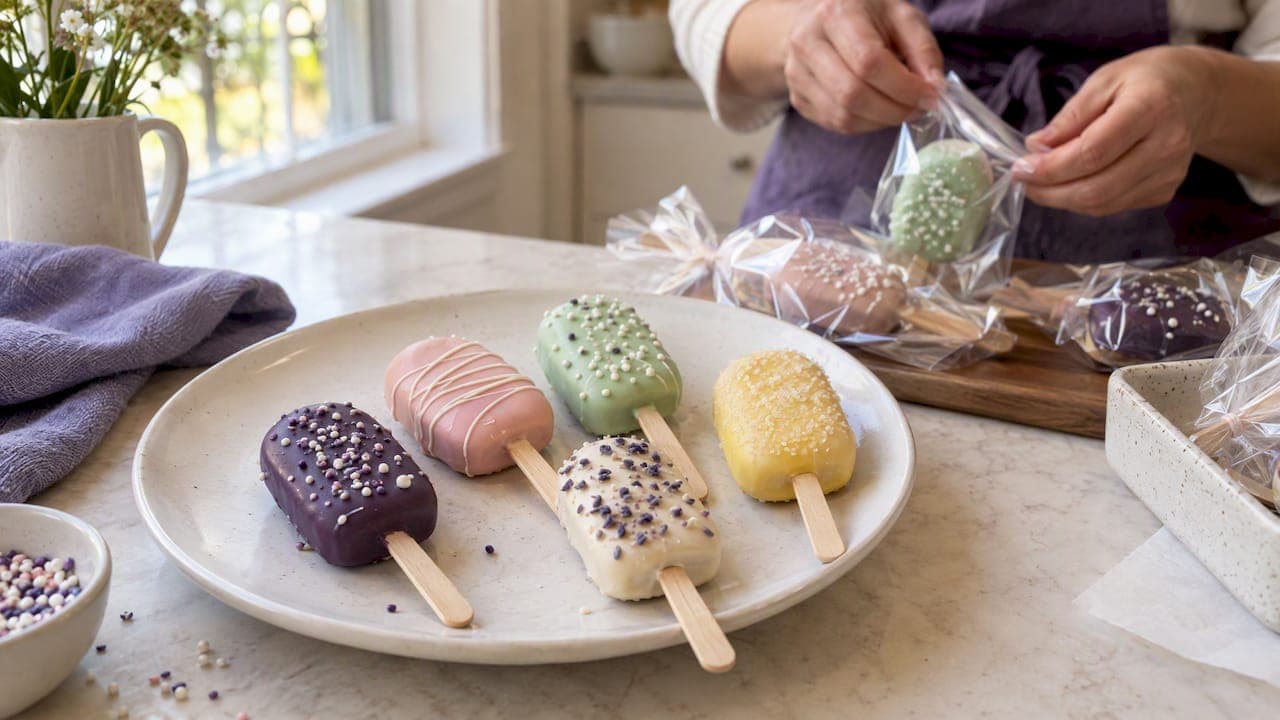
The most useful way to pick cake pop flavours is by group: classic crowd-pleasers, chocolate-forward options, fruit and citrus, and seasonal or novelty picks, with filled centres adding another layer of choice. This guide breaks each group into real options, explains how fillings and coatings pair with them, and adds event-specific advice along with practitioner notes from a home-based cake pop baker.
TL;DR:
- Classic flavours like vanilla, chocolate, and red velvet remain the most versatile and widely accepted options for any event.
- Seasonal variations mainly use flavor adjustments such as zest or extracts, with summer and winter themes including key lime and peppermint, respectively.
- Filling choices like cream cheese, ganache, and fruit curd add texture contrast and should be refrigerated at 4°C or below for safety.
- Coatings, especially tempered chocolate or candy melts, influence both appearance and flavor, with specific pairing tips for different colour schemes.
- Custom orders should confirm flavour, coating type, dietary restrictions, and delivery details beforehand to ensure suitability and safety.
Table of Contents
- 1. Classic and crowd-pleasing cake pop flavours
- 2. Creative and seasonal flavour ideas by theme
- 3. Filling and centre ideas for filled cake pops
- 4. Coatings, toppings and pairing tips for cake pops
- 5. How to choose flavours for an event
- 6. Practitioner tips from a home-based cake pop bakery on flavours and finishes
- 7. Flavour combinations and balancing contrasting tastes
- 8. Adapting cake pop flavours for dietary restrictions
- 9. Testing and refining a cake pop recipe before final production
- How London's Sweets can help with flavour and order ideas
- FAQ
- Sources
1. Classic and crowd-pleasing cake pop flavours
Some flavours work for almost any gathering because they are familiar and easy to pair with toppings. These are the ones worth starting with if you want a safe, well-liked base for a party, office gathering, or family event.
- Vanilla bean: a soft, buttery base that takes dye and sprinkles well, making it a go-to for colour-matched events.
- Chocolate fudge: rich and dense, often paired with a simple drizzle instead of heavy decoration.
- Red velvet: the cocoa hint and cream cheese pairing give it a slightly tangy edge that stands out from plain chocolate.
- Funfetti: vanilla cake studded with sprinkles baked in, a natural pick for birthdays.
- Marble: a visual and flavour split between vanilla and chocolate in one pop.
- Strawberry shortcake: fresh and light, good for spring or summer tables.
- Cookies and cream: crushed cookie pieces folded into a vanilla base, popular with younger guests.
- Birthday cake: similar to funfetti but often paired with a vanilla buttercream filling for extra sweetness.
- Coconut: shredded coconut folded into the cake or used as a coating, good for a tropical-themed table.
- Banana: a less common but reliable choice, especially paired with a light cream filling.
- Carrot cake: spiced and moist, often finished with cream cheese and a simple sugar crystal topping.
- Peanut butter chocolate: a rich combination that holds up well to a chocolate coating without becoming too sweet.
Simple swaps keep these classics feeling fresh without changing the base recipe. A vanilla pop finished in white chocolate with pastel sprinkles reads as a baby shower treat, while the same base finished in dark chocolate with gold sugar crystals suits a more formal event. Changing only the coating and topping is often enough to shift a flavour from casual to dressed up.
2. Creative and seasonal flavour ideas by theme
Seasonal flavours add a sense of occasion to an event without requiring a completely new recipe. The easiest approach is to keep a stable cake base, usually vanilla or chocolate, and build seasonal character through zest, extracts, or curds rather than reworking the whole batter, since that keeps the texture consistent across batches, a point confirmed by the method behind a lemon cake-pop recipe that uses zest and juice stirred into a finished base rather than the raw batter.
- Spring: lemon poppyseed, strawberry lemonade, and matcha green tea suit lighter, brighter tables.
- Summer: key lime, peach cobbler, and salted caramel work well for outdoor or casual events.
- Autumn: pumpkin spice, maple pecan, and apple cinnamon fit harvest-themed gatherings.
- Winter and holiday: eggnog, peppermint bark, and gingerbread suit December celebrations, while a green-tinted cake pop recipe shows how a simple colour and flavour swap, such as a green cream-cheese frosting, converts a base recipe into a St. Patrick's Day treat.
- Novelty and theme: s'mores (toasted marshmallow and graham-cracker crumb), piña colada, and root beer float appeal to guests who want something unexpected.
Converting a classic recipe into a seasonal one usually means adjusting a concentrated flavour element such as zest, extract, or spice blend, then updating the coating colour and topping to match. A chocolate base becomes a s'mores pop with a graham-cracker rim and torched marshmallow fleck; a vanilla base becomes a key lime pop with a few drops of lime extract and a graham crumb edge.
3. Filling and centre ideas for filled cake pops
Filled cake pops add texture contrast between the moist cake and a creamier centre, and the filling you choose should match the richness of the cake base. A light vanilla cake with a lemon curd centre reads as refreshing, while a dense chocolate cake with ganache leans indulgent.
- Cream cheese: tangy and smooth, a natural match for red velvet or carrot cake bases.
- Chocolate ganache: rich and dense, best paired with chocolate or peanut butter cake.
- Fruit curd: lemon or raspberry curd adds sharpness to vanilla or coconut bases.
- Dulce de leche: a caramel-like centre that pairs well with banana or vanilla cake.
- Marshmallow fluff: light and airy, suited to s'mores-style or graham-based pops.
Any dairy-based filling or frosting needs steady refrigeration, and Dairy Farmers of Canada's food safety standards recommend storing it at 4°C or below, with refrigerated fresh cakes typically holding for around five days under those conditions. A national food-safety testing survey of refrigerated baked desserts sampled thousands of products and found a small number of cake samples needed investigation for microbial indicators, a reminder that careful handling and temperature control matter for any ready-to-eat decorated cake, cake pops included.
4. Coatings, toppings and pairing tips for cake pops
The coating you choose affects both the finished look and how the flavour comes through. Real chocolate (melted couverture or baking chocolate) gives a snap and a cleaner cocoa taste, but it is fussier to work with because it needs careful tempering to set properly. Candy melts are more forgiving for home bakers and hold colour well, which is why a chef-tested celebration cake-pops recipe from Redpath Sugar leans on candy melts for consistent, party-ready coatings.
- White chocolate or white candy melts: best for citrus, vanilla, and pastel-coloured themes.
- Dark or milk chocolate: suits chocolate, peanut butter, and coffee-forward flavours.
- Coloured candy melts: ideal when matching a specific event colour palette.
- Sprinkles and sugar crystals: added immediately after dipping, while the coating is still wet, so they stick.
- Drizzle accents: added once the base coat has fully set, so the contrasting colour stays crisp instead of bleeding.
Pro Tip: If candy melts seem too thick to dip smoothly, stir in 5 to 15 millilitres of shortening or neutral oil at a time rather than adding more heat, since gentle heat with constant stirring keeps the coating stable while a small amount of fat improves flow without weakening how it sets.
5. How to choose flavours for an event
Picking a flavour is partly about taste and partly about logistics. This short checklist covers what to think through before placing an order or starting a batch.
- Crowd familiarity: choose at least one classic flavour if the guest list includes children or a mixed-age group.
- Allergies and dietary needs: ask every guest list host about nut, dairy, egg, or gluten concerns before finalizing a recipe or order.
- Transport and timing: pick a sturdier coating like chocolate or firm candy melts if the pops will travel or sit out for hours.
- Formality: simple colour blocking and drizzle read as polished for weddings, while bright sprinkles suit birthdays.
- Colour and brand match: corporate orders often need an exact colour palette, so confirm this detail with your baker in advance.
When ordering from a baker, it helps to ask directly about the cake base, coating type, allergen handling, and how far in advance the order needs to be placed.
6. Practitioner tips from a home-based cake pop bakery on flavours and finishes
This bakery in Dundas, Ontario, makes handmade cake pops in a signature rounded-rectangle shape on a natural wood stick, a deliberate departure from the standard round cake ball. Finishes are kept realistic and achievable: hand-dipped coatings, a simple drizzle, sugar crystals, ordinary sprinkles, and clean colour blocking, each pop individually wrapped once set.
Flavour and colour choices are adapted to the event rather than offered as an unlimited menu, and every detail, including exact design, quantity, and timing, is confirmed with the customer before an order is accepted. Paid delivery may be requested within roughly 100 kilometres of Dundas, though the address, availability, and fee are always confirmed case by case rather than assumed. Anyone planning an order can review current product lines and finishes on the London's Sweets site before requesting a quote.
7. Flavour combinations and balancing contrasting tastes
A cake pop tastes more interesting when it plays one dominant note against a contrasting one rather than stacking several sweet elements together. Sweet and tart is the easiest pairing to start with: a vanilla or coconut base against a raspberry or lemon curd centre keeps the sweetness from feeling flat. Rich and light works the same way in reverse, pairing a dense chocolate or peanut butter cake with a lighter filling like marshmallow fluff so the pop does not feel heavy bite after bite.
Salted caramel is a useful example of built-in contrast, since the salt cuts the sweetness of the caramel rather than adding to it. The same logic applies to coffee paired with chocolate, or ginger paired with a sweet cream filling: one element provides sharpness or bitterness while the other carries the sweetness. When testing a new combination, it helps to taste the filling and cake together before deciding on a coating, since a coating that is too sweet can flatten a carefully balanced centre. Citrus zest, a pinch of salt, or a spice like cinnamon or ginger are the simplest tools for adding that contrast without reworking an entire recipe.

8. Adapting cake pop flavours for dietary restrictions
Gluten-free cake pops generally start from a gluten-free flour blend cake base, since the dense, moist texture of a cake pop hides small differences in crumb structure better than a layer cake would. Vanilla, chocolate, and carrot cake bases tend to adapt well to gluten-free flour swaps because their flavour does not depend on a particular flour's structure.
Vegan versions typically replace dairy milk, butter, and eggs with plant-based substitutes, and the filling needs the same treatment: a dairy-free cream cheese or coconut-based ganache keeps the flavour profile close to the original while avoiding animal products. Nut-free versions mean checking not just the cake and filling but also toppings, since crushed nuts or nut-based pralines are easy to overlook as a topping choice. Anyone ordering for a group should flag allergy and dietary needs as early as possible, since a baker often needs to adjust more than one component of the recipe, and a government food-safety guide for iced sponge cakes lists wheat, egg, milk, soya, and sulphites among the allergens worth confirming before placing an order.
9. Testing and refining a cake pop recipe before final production
Before committing to a flavour for a full batch, it helps to make a small test run, usually six to twelve pops, so you can judge texture, sweetness, and how the coating sets without wasting a full recipe. Chilling the formed cake balls briefly before dipping, rather than dipping them at room temperature, tends to produce a cleaner coating and fewer cracks, a step reflected in recipe methods that call for freezing or refrigerating cake balls for ten to thirty minutes before the dip.

Taste the filling and cake together at room temperature, since cold tasting can mute sweetness and make a filling seem less sweet than it will taste once served. If a flavour seems too one-note, add a contrasting element such as citrus zest or a pinch of salt rather than more sugar. Testing one variable at a time, changing only the filling or only the coating between batches, makes it easier to tell which change actually improved the result.
How London's Sweets can help with flavour and order ideas
Reading through flavour ideas is a useful first step, but turning that into a finished batch takes time, equipment, and a few trial runs most hosts would rather skip. London's Sweets handles that part: handmade cake pops in the signature rounded-rectangle shape, hand-dipped and individually wrapped, built around flavour and colour choices that suit your event rather than a fixed menu.

- Classic Drizzle, Celebration Sprinkles, Signature Mix, and Custom Colour Theme are the current product lines, each priced from $42 per dozen and up depending on the finish.
- Orders start with the website form, get reviewed personally, and are confirmed with exact design, quantity, and timing before acceptance.
- Paid delivery may be requested within roughly 100 kilometres of Dundas, with the address, availability, and fee confirmed per order.
If you are planning a birthday, baby shower, wedding, or corporate event, you can view flavour and colour options and request a quote directly on the London's Sweets site. Hosts staging a larger dessert table alongside other vendors may also want to look at rental options like The Culinary Cube for a pop-up kitchen or serving space.
FAQ
What are good flavours for cake pops?
Vanilla, chocolate, and red velvet are reliable starting points because they suit most age groups and pair easily with any coating colour. Beyond those, lemon, salted caramel, and s'mores are popular choices when a host wants something more distinctive.
What are all the cake pop flavours?
There is no fixed or official list of cake pop flavours, since any cake and filling combination can become a cake pop. The most common groupings are classic (vanilla, chocolate, red velvet, funfetti), fruit and citrus (lemon, strawberry, key lime), and seasonal or novelty flavours (pumpkin spice, peppermint, s'mores).
What are the 10 most popular cake flavours?
Popularity varies by region and event type, so there is no single authoritative ranking. Among home bakers and recipe sources, vanilla, chocolate, red velvet, funfetti, carrot cake, lemon, marble, coconut, cookies and cream, and strawberry shortcake are frequently mentioned as favourites.
What are some good filling ideas for cake pops?
Cream cheese, chocolate ganache, and fruit curd are common fillings that add texture contrast to the cake. Dulce de leche and marshmallow fluff also work well, especially paired with vanilla, chocolate, or banana cake bases, and any dairy-based filling should be kept refrigerated at 4°C or below.
Sources
- Canadian food safety testing report (refrigerated baked dessert sampling)
- Eggs
- Celebration cake pops — Redpath Sugar