
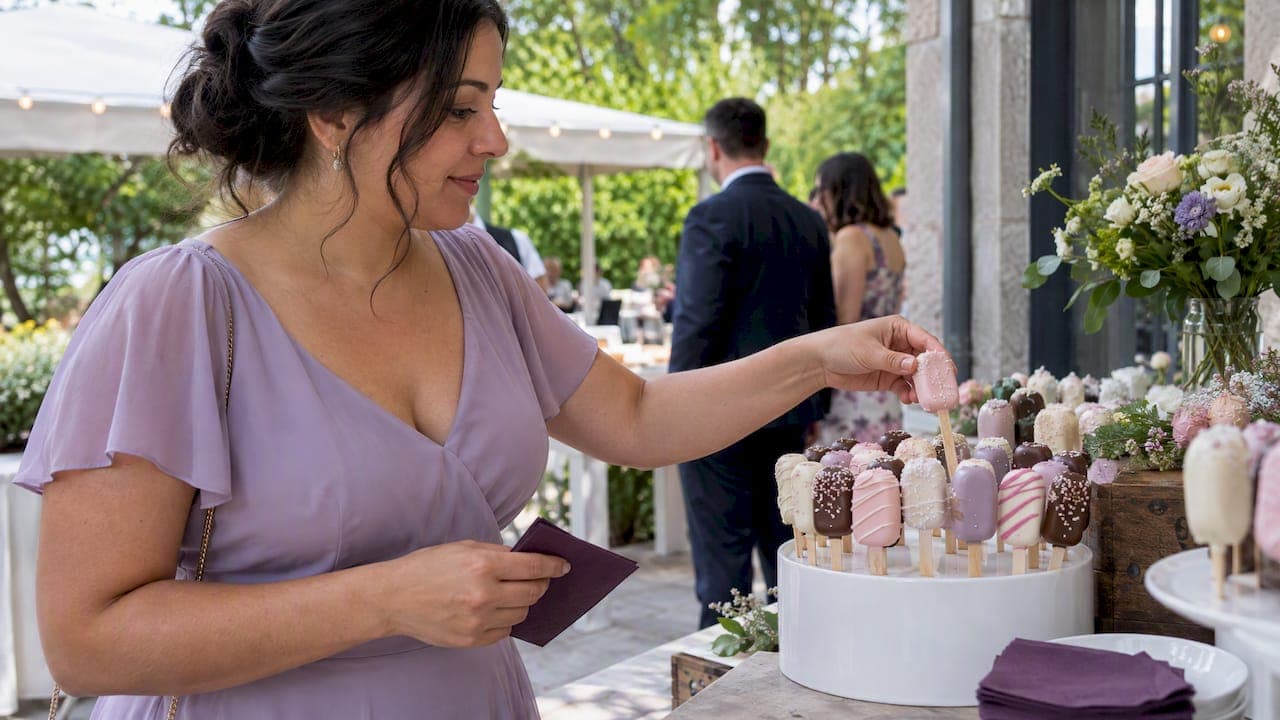
You do not need a tall tiered cake to mark the moment. A curated dessert spread or a small cutting cake paired with bite-sized treats gives guests more variety, makes portioning simpler, and handles dietary restrictions far more gracefully. Individually wrapped options, like our cake pops at London's Sweets, fit easily into either approach as a dessert, favour, or both.
TL;DR:
- Match service style to reception: plated mini desserts suit seated dinners, while donut walls and cake pops work better for cocktail or buffet service.
- Limit the spread to 5 to 8 distinct items, including contrasting textures and a fruit option, so staff can replenish and monitor freshness.
- Keep perishable desserts chilled and bring them out in small batches; label allergens clearly, with severe allergy portions packed separately using clean equipment.
- A small display cake can preserve the photo and cutting ritual while guests receive separate desserts; confirm refrigeration, staffing, and outside food rules with the venue.
Table of Contents
- 1. Build a dessert spread guests will actually enjoy
- 2. How do you choose the right alternative for your wedding?
- 3. Keeping the spread fresh, safe and allergen-aware
- 4. Keeping or reframing the cake-cutting moment
- Why our cake pops make an easy wedding dessert and favour
- FAQ
- Sources
1. Build a dessert spread guests will actually enjoy
A well-planned spread beats a single cake on almost every practical measure: guests pick what they like, portions are naturally controlled, and setup can match any venue style from barn to ballroom. The trick is picking a handful of options that complement each other rather than overwhelming the table.
- Donut wall or tower: a grab-and-go favourite that doubles as a backdrop; guests serve themselves, which keeps the line moving at cocktail hour.
- Cupcake tower: offers several flavours in one display and makes portioning simple since each cupcake is already a single serving.
- Cake pops, individually wrapped: portable, mess-free, and easy to hand out as both dessert and favour; our cake pops at London's Sweets come hand-dipped with drizzle, sugar crystals, or ordinary sprinkles in a rounded-rectangle shape on a natural wood stick.
- Macaron tower: a delicate, elegant choice, though macarons bruise easily, so handle and transport them with care and keep them out of direct sun.
- Pie bar: rustic and seasonal, pairs well with a fall or harvest-themed reception and travels well in individual slices.
- Ice cream or sundae bar: highly interactive and a guest favourite, but it needs a chiller or freezer plan to hold temperature through the reception.
- Cheese tower or dessert charcuterie: a savoury-sweet option for guests who prefer less sugar, often paired with fruit and crackers.
- Roaming patisserie or passed mini desserts: servers circulate with trays of bite-sized sweets, which keeps energy high and adds a bit of theatre to the room.
- Brownies, cookies and bars: sturdy, durable, and forgiving in outdoor heat, making them a safe pick for marquee or garden weddings.
- Mini tarts, mousse cups, profiteroles or croquembouche: petite plated desserts suited to a more formal, seated reception.
- Elevated comfort bites: waffle bites with inventive garnishes are part of the interactive dessert trend for 2026, bringing a playful, chef-finished feel to the table.
- Low-risk non-perishables: fruit skewers and meringue kisses hold up well for outdoor weddings or long cocktail hours since they do not need refrigeration.
Mixing textures (crunchy, creamy, chewy) and at least one fruit-forward option tends to satisfy the widest range of guests without filling every inch of table space. Our dessert table setup guide walks through how to combine a few of these formats, including cake pops, into one cohesive display.
2. How do you choose the right alternative for your wedding?
The right pick depends less on trend lists and more on how your reception actually runs. Start with these checks before you lock in a format.
- Service format: a seated dinner suits plated mini desserts, while a cocktail-style or buffet reception favours grab-and-go items like donut walls or cake pops.
- Portioning and variety: curate 5 to 8 distinct items rather than a dozen similar options, which keeps the table visually clean and easier to replenish.
- Dietary and allergen planning: build in clearly labelled allergen-friendly options and consider pre-packed portions for any guest with a severe allergy.
- Logistics: confirm refrigeration access, staffing, vendor coordination, and any venue rules on outside food before finalizing your plan.
- Ceremony moment: decide whether you want a small cutting cake for photos, since that ritual can run independently of what guests actually eat.
Pro Tip: Ask your venue coordinator how long dessert service typically runs before you commit to a format; a two-hour cocktail hour needs sturdier items than a seated dinner with a tighter dessert window.
3. Keeping the spread fresh, safe and allergen-aware
Skipping a single tiered cake means more moving pieces, so a little planning keeps the table looking good and staying safe through the whole reception.
- Limit how long perishable items sit out, and refresh the table in small chilled batches rather than loading it all at once.
- Curate 5 to 8 distinct items so your team can realistically monitor freshness and swap trays without falling behind.
- Label allergens clearly and pack severe-allergy portions separately on clean equipment, following food allergen guidance from Inspection Canada, which flags undeclared allergens as a serious risk at any food service.
- Confirm with your venue what refrigeration is available and how many staff will be on hand to manage the table.
- Build a replenishment schedule for roaming or passed desserts so servers know when to circulate fresh trays.
Public-health guidelines for special events distinguish non-hazardous items like cookies and bars from potentially hazardous desserts that need refrigeration and careful handling. Knowing which category each item on your table falls into makes the safety plan much simpler to execute.
4. Keeping or reframing the cake-cutting moment
Plenty of couples still want the photo of a knife through a cake, even if guests never eat a slice of it. A few approaches let you keep the ritual without building a full-sized dessert around it.
- Use a small display cutting cake for photos, then serve bite-sized desserts like cake pops or mini tarts to guests separately.
- Opt for a private cutting moment between partners rather than a public slice, a shift more couples are making as they move away from a public cake-cutting event.
- Swap the ritual entirely for a plated dessert at the head table, a champagne toast, or a signature dessert reveal instead.
- If you do keep a display cake, keep it small, decorate it to match your dessert table, and place it where the lighting works for photos.
Why our cake pops make an easy wedding dessert and favour

We make handmade cake pops in Dundas, Ontario, in our signature rounded-rectangle shape on a natural wood stick, finished with hand-dipped coating, drizzle, sugar crystals, or ordinary sprinkles in custom colours. Every cake pop is individually wrapped and made to order, which suits weddings particularly well.
- Add them to a dessert bar alongside donuts, cupcakes, or a pie station for variety without extra plating.
- Hand them out as a wedding favour guests can take home instead of (or alongside) a slice of cake.
- Offer them as a late-night treat when energy picks back up on the dance floor.
Requests come through our website form, and paid delivery may be requested within approximately 100 km of Dundas, with exact address, timing, and fee confirmed before we accept each order. If you are planning favours for your big day, our wedding favours page is the place to start the conversation.
FAQ
What are some creative alternatives to cutting a wedding cake?
Many couples now use a small display cake for photos while serving guests a separate dessert spread, or they skip the cutting moment entirely in favour of a private toast or a signature dessert reveal. Interactive options like a roaming patisserie or a donut wall replace the formal cutting ritual with something guests actively take part in.
What is the best alternative for cake?
There is no single best option since it depends on your reception style, but a curated dessert spread of 5 to 8 items, such as cupcakes, macarons, and individually wrapped cake pops, tends to satisfy the widest range of guests while keeping portioning simple.
What are some good alternative desserts to cake for a wedding?
Popular choices include donut walls, cupcake towers, pie bars, cheese towers, macarons, and bite-sized desserts like mousse cups or cake pops, often combined on one table rather than served alone. Many of these double as take-home favours as well as dessert.
What are the trends for wedding cakes in 2026?
For 2026, interactive and theatrical dessert experiences are leading the way, including roaming patisseries, chef-finished sweets served tableside, and elevated comfort foods like dressed-up waffle bites, according to catering trend coverage for 2026. Static single-cake displays are giving way to curated, multi-item dessert tables.
How do I plan a dessert table for guests with dietary restrictions?
Talk to your baker ahead of time about allergen-friendly or dietary-specific options, and use clear signage so guests can identify what is safe for them, as guidance on planning for dietary restrictions recommends. For guests with severe allergies, a separately packed, labelled portion handed directly to them is safer than a shared table.
Sources
- Inspection Canada — Preventive controls for food allergens, gluten and added sulphites
- EventSource — catering and wedding trends 2026
- Today's Bride — how to plan ahead for guests with dietary restrictions
- Peel Region — food safety at special events