
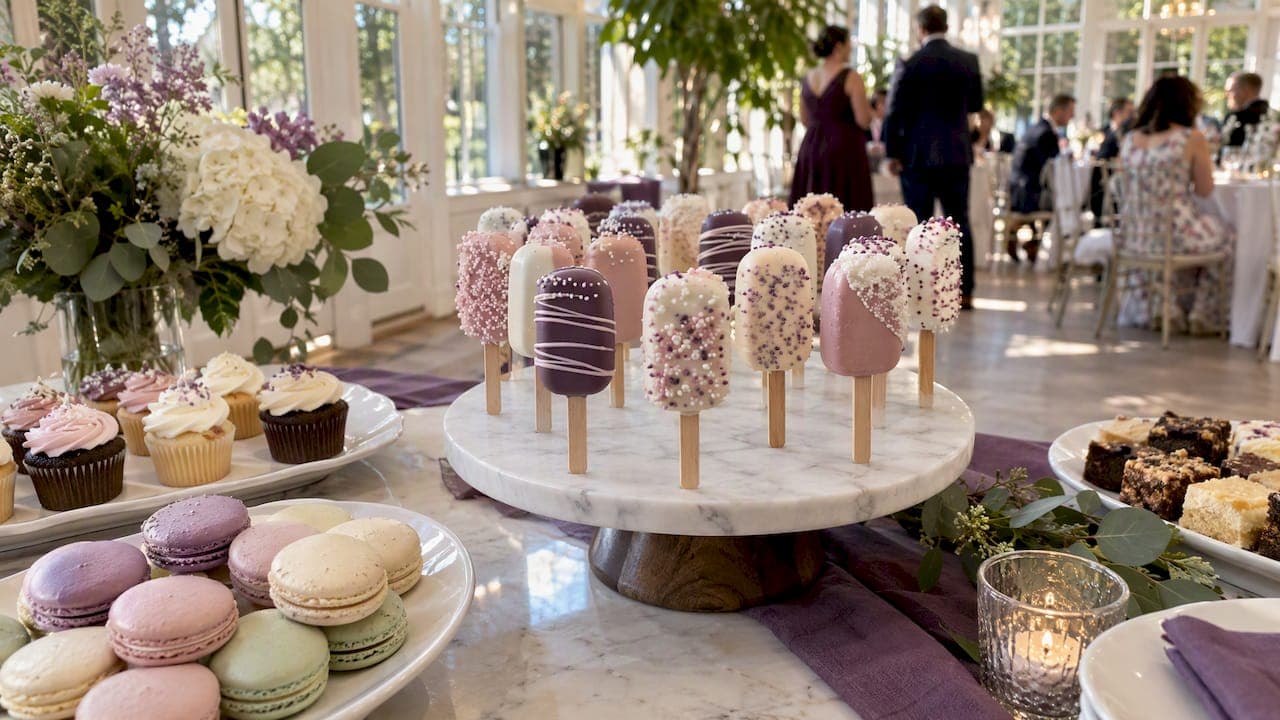
The most practical replacements for a tiered wedding cake are a dessert table, one plated "hero" dessert, or a lineup of single-serve treats like cupcakes, macarons, or mini tarts. Cake pops fall into that single-serve category and work well for favours or a self-serve display, including the rounded, hand-finished style we make at London's Sweets. Each option carries its own portioning and service logic, which is worth sorting out before you book anything.
TL;DR:
- Allow 2 to 3 portions per guest as the main dessert, 1 to 2 alongside a small cake, and 0.75 to 1 for late night.
- Plated desserts suit formal seated dinners, while relaxed receptions can use self service; outdoor heat favors passed trays followed by a smaller station.
- Ask vendors early about custom order lead times, delivery and setup windows, storage, restocking, leftover packaging, and clear allergen labels on each item.
- Ontario guidance classifies many baked goods without custard as low risk, but cream or custard fillings need temperature control and closer handling.
Table of Contents
- 1. Popular dessert alternatives grouped by format
- 2. How do you choose the right alternative for your wedding?
- 3. Designing the dessert table so it flows, not stalls
- 4. Timing, booking, and budget for dessert vendors
- 5. Food safety and dietary notes for ready-to-eat desserts
- 6. Spotlight: cake pops as a wedding dessert
- How to book London's Sweets for your wedding
- FAQ
- Sources
1. Popular dessert alternatives grouped by format
Couples looking past the traditional tiered cake usually land in one of five categories, and each suits a different kind of wedding.
- Single-serve sweets (cake pops, cupcakes, macarons, mini tarts, brownies): fast to serve, easy to portion per guest, and ideal for casual or mid-size weddings where guests mingle rather than sit for a plated course.
- Stations and carts (donut wall, ice cream sundae bar, gelato cart, churro station): strong for a festival-style reception, but they need counter space, sometimes freezer access, and a staff member to keep things stocked.
- Plated or served desserts (a single mousse or tart plated and brought to every table): the most formal option and the easiest to control portion-wise, since each guest gets exactly one serving.
- Nostalgic or novelty options (doughnut towers, ice-cream sandwiches, pie on a stick): photogenic and conversation-starting, best for relaxed, personality-driven weddings rather than black-tie affairs.
- Savoury or cheese alternatives (a cheese board in place of dessert): works for couples who want a lighter finish or are serving dessert earlier in the day, although it reads less "celebratory" in photos.
Cake pops sit comfortably in the single-serve category. A rounded-rectangle shape on a natural wood stick, like the ones we make at London's Sweets, is individually wrapped, so it travels well on a table or in a favour basket without needing plates or cutlery. Finishes such as hand-dipped coating, a simple drizzle, sugar crystals, or ordinary sprinkles give each batch a distinct look without adding handling steps for your catering staff.
2. How do you choose the right alternative for your wedding?
The right choice depends less on trend and more on four or five practical factors specific to your event.
- Guest count and appetite: larger guest lists favour grab-and-go formats; smaller, seated weddings can support a plated dessert course.
- Venue logistics: confirm whether the space has freezer storage, enough plateware, or staff available to serve and clear.
- Season and temperature: outdoor summer weddings rule out anything that melts quickly, while winter events open up more options.
- Desired formality: a dessert table reads casual; a plated course reads formal, even without a cake.
- Dietary needs: check how many guests need gluten-free, dairy-free, or other accommodations before finalizing quantities.
When you're vetting a vendor, ask about lead time for custom orders, the delivery or setup window, whether they restock or refill during the event, how leftovers are packaged, and how allergens are labelled on each item.
For portioning, a refined dessert table plan recommends 2 to 3 two-bite portions per guest when dessert is the main sweet offering, and 1 to 2 pieces per guest when it's supporting a smaller cake. Late-night sweets tend to need less, around 0.75 to 1 piece per guest, depending on what else is on the menu.

Pro Tip: Order slightly more of your least expensive item and slightly less of your most delicate one, since guests tend to gravitate toward whatever looks easiest to eat standing up.
3. Designing the dessert table so it flows, not stalls
A dessert spread works best when it has one clear focal point and a plan for traffic.
- Build a "hero plus support" layout: one standout item, such as a tiered cake-pop display or a doughnut tower, surrounded by two or three smaller options with different textures and flavours.
- Keep the dessert table away from the bar line to prevent one queue from blocking the other.
- Use small plates and tongs so guests can serve themselves without hesitation or mess.
- Stagger the opening or plan a mid-event restock so the table looks full for photos taken later in the night, not just right after dinner.
Self-serve tables suit relaxed receptions, passed bites work well for cocktail hours, and plated desserts for every guest suit formal, seated dinners. For outdoor or warm-weather events, hybrid setups, a passed tray followed by a smaller self-serve station, tend to hold up better than a single large display left out in the heat.
4. Timing, booking, and budget for dessert vendors
Custom dessert vendors book up during peak wedding season, so it's worth reaching out early, especially if you want colour-matched finishes or a specific design.
- Ask about lead times well before your date, particularly for custom colours or finishes that take extra preparation.
- Expect pricing in a few different shapes: per-piece, per-dozen, a flat delivery or setup fee, or per-head for plated service. Decide early which format fits your budget before comparing vendors.
- Confirm with your venue and caterer who handles delivery timing, where desserts are stored before service, and who plates or clears once the moment is over.
Getting these details settled early avoids the kind of last-minute scramble that tends to show up in photos as a half-empty table.
5. Food safety and dietary notes for ready-to-eat desserts
A Canadian survey of refrigerated ready-to-eat baked desserts tested 2,975 samples between 2016 and 2018 and found most were satisfactory, though a small number showed pathogens such as B. cereus, S. aureus, L. monocytogenes, or generic E. coli. That points to safe handling and proper vendor hygiene as the real safeguard, not any single dessert type being inherently risky.
Ontario guidance for home-based food businesses treats many baked goods, cookies, cakes without custard, cupcakes, as low-risk, while custard or cream-filled items need temperature control and closer handling. Before booking, ask vendors how items are prepared and transported, and request clear allergen labelling on the dessert table. Keeping a modest number of gluten-free or dairy-free options on hand covers most guest lists without overcomplicating the order.
6. Spotlight: cake pops as a wedding dessert
Cake pops have become a popular wedding dessert option because they're bite-sized, easy to grab without plates, and simple to customize to a colour palette. At London's Sweets, each one keeps its signature rounded-rectangle shape on a natural wood stick, finished with options like custom colours, hand-dipped coating, a drizzle, sugar crystals, or ordinary sprinkles, and wrapped individually.

That wrapping matters for display. Cake pops can be arranged in a tiered tower, set upright in an acrylic stand for self-serve, built into a "pop tree" centrepiece, or handed out individually as favours guests take home. For portioning, treat them like other two-bite sweets: 2 to 3 per guest if they're the main dessert, fewer if they're sharing the table with other options. As with any wedding order, delivery area, timing, and fees need to be confirmed directly with the baker before the date is locked in.
How to book London's Sweets for your wedding
If cake pops fit the look and flow you're planning, we offer several product lines for weddings built around a hand-dipped, individually wrapped format. Orders go through the form on our website, where you can describe your colour palette and finish preferences.

A few things to sort out when you reach out:
- Ask whether delivery is available to your venue, since it depends on distance and is confirmed per order.
- Share your wedding date early so we can discuss lead time for custom colours or finishes.
- Mention any allergen concerns so we can talk through what's possible for your guest list.
Start by browsing our wedding cake pop favours page or visiting our main site to see current product lines and submit your details.
FAQ
What can I do instead of a wedding cake?
Common replacements include a dessert table with several single-serve sweets, one plated dessert served to every guest, or a dessert station like a donut wall or gelato cart. Cake pops are a popular single-serve option because they're easy to display and don't require plates or cutlery.
What are some good dessert options for a wedding?
Cupcakes, macarons, mini tarts, brownies, and cake pops all work well as stand-ins for a tiered cake, and each can be dressed up with finishes like drizzle, sugar crystals, or custom colours. Stations such as an ice cream bar or churro cart add variety for weddings with a more casual feel.
What are some easy desserts I can serve at a wedding?
Individually wrapped sweets like cake pops or cookies are among the simplest to serve, since guests can take one without needing a plate or server. Ontario guidance notes that many baked goods without custard fillings are considered low-risk, which also makes them simpler to transport and display.
What are some affordable and fun alternatives to wedding cake?
A dessert table mixing a few inexpensive items, like cookies, brownies, and cake pops, usually costs less than a full tiered cake while giving guests more variety. Pricing for custom dessert vendors is often quoted per dozen or per piece, so comparing a few vendors in that format makes budgeting easier.
Sources
- Bacterial pathogens in pre-prepared, refrigerated baked desserts (final report)
- A refined dessert table plan — WeddingWin
- Guide to starting a home-based food business — Ontario Ministry of Health
- 15 fun cake pop ideas for your wedding — Brides