
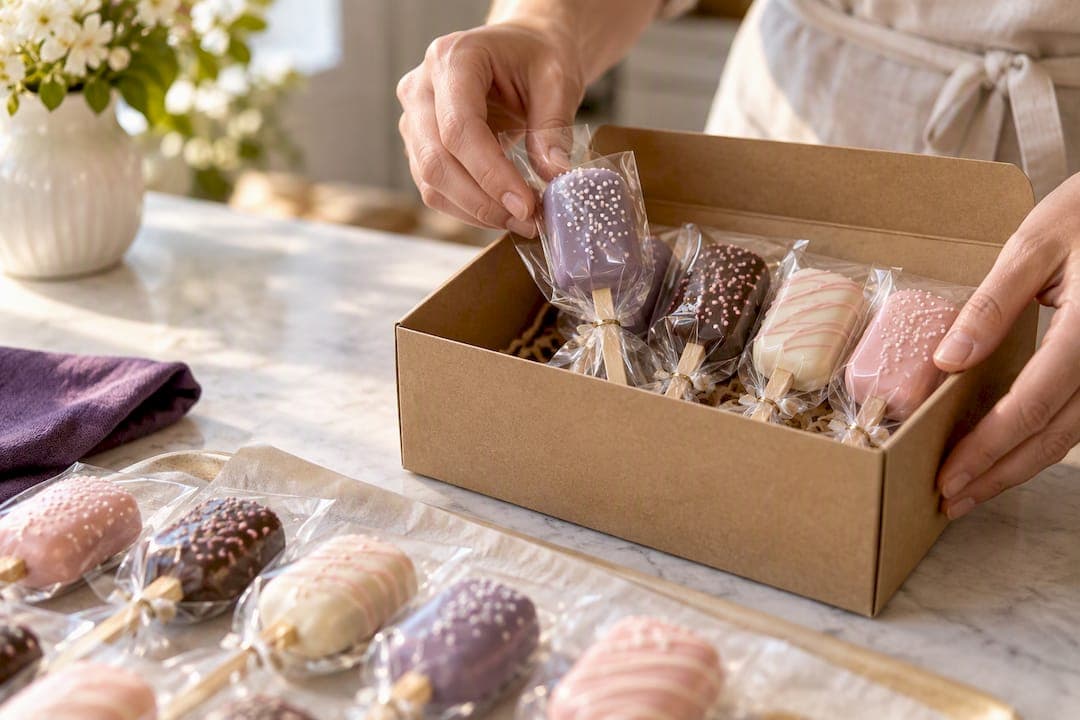
The most effective employee appreciation treats are thoughtful, personalized and safe: individually wrapped, small-batch treats or a short, meaningful experience beat generic gift baskets every time. A local maker like London's Sweets shows what that looks like in practice, with individually wrapped cake pops built for events. Before you order anything, confirm dietary needs and check Canada Revenue Agency rules on gifts.
TL;DR:
- A personalized, individually wrapped treat from a local bakery like London's Sweets ensures safety, customization, and a meaningful gesture without mass-produced appearances.
- Budgeting $10 to $25 per person typically yields thoughtful options like cake pops, snack boxes, or modest e-gift cards, with larger amounts reserved for special milestones.
- Attaching a specific, brief note with recognition of a particular contribution enhances the impact of any treat, making it more memorable and sincere.
- To avoid exclusion and ensure fairness, deliver treats in individual packaging, confirm dietary restrictions early, and choose occasion-agnostic recognition methods.
- Small-batch, local treats paired with clear logistics and allergy considerations support inclusive, safe, and impactful employee appreciation practices.
Table of Contents
- What kinds of appreciation treats work best?
- How much should you budget per person?
- How do you make a treat feel personal, not generic?
- How do you keep treats safe and inclusive?
- What does a smooth order actually require?
- Why local, small-batch treats solve the inclusion problem
- What pitfalls trip up managers buying treats in bulk?
- Does it actually work? How to measure the impact
- What legal and fairness issues go beyond the tax rules?
- How London's Sweets can serve as a direct solution for team treats
- Sources
- FAQ
What kinds of appreciation treats work best?
Not every team wants the same thing, and not every budget stretches the same way. The right pick depends on whether your team is in one office, spread across time zones, or working shifts where a Tuesday morning coffee cart just will not reach everyone.
Food remains the most universal option because it is easy to personalize and simple to distribute. Individually wrapped, small-batch cake pops (the kind London's Sweets makes in Dundas, Ontario) work well here because each piece arrives sealed and ready to hand out, no serving tray or shared utensils required. Branded snack boxes and premium coffee or tea kits fill a similar role for teams that want something they can enjoy at their own desk.
Non-food treats matter for anyone managing a team with mixed dietary needs or a culture that leans away from sugar. A desk plant, a good branded mug, or a small self-care kit sends the same message without touching anyone's allergy list.
Experiences tend to land harder than objects, especially for teams that already feel overloaded with stuff. Paid time off, a team lunch, or a local experience voucher gives people something to look forward to rather than another item to find room for.
Digital rewards solve the distance problem. E-gift cards and points on a recognition platform work for remote employees who will never see a physical drop-off, and they let the recipient choose something that actually fits their life.
- Food: individually wrapped cake pops, branded snack boxes, premium coffee or tea kits.
- Non-food: desk plants, branded mugs, self-care kits.
- Experiences: paid time off, team lunches, local experience vouchers.
- Digital: e-gift cards, points on a recognition platform.
Frontline and shift workers usually respond best to food and digital formats since both travel well and do not depend on a fixed desk. Remote staff need the digital or shippable options; anything that requires same-day pickup will exclude them by default.
How much should you budget per person?
Budget shapes the category more than it shapes the impact. A well-chosen $15 item can outperform a rushed $60 gift basket, so the goal is matching the tier to the occasion rather than maximizing spend.
- Under $10: a coffee gift card, a single branded item, or a small piece from a shared treat box.
- $10 to $25: an individually wrapped cake pop set, a snack box, or a modest e-gift card.
- $25 to $50: a small self-care kit, a team lunch contribution, or a custom-themed treat order.
- $50 and up: an experience voucher, a larger custom order for a milestone, or a half-day off.
The trade-off at every tier is the same: you are balancing quantity, customization and experience, and you rarely get all three at once. A bigger batch usually means less personalization per item, while a highly customized order for twelve people costs more per head than an order for sixty.
Bulk ordering from a local baker is one way to keep quality high without losing control of cost. Ordering by the dozen, choosing one consistent finish across the batch, and giving the baker a few weeks of lead time all help keep the per-person price predictable while still producing something that looks intentional rather than mass-bought.
How do you make a treat feel personal, not generic?
Personalization is not a nice extra, it is the difference between a treat that gets remembered and one that gets tossed in a drawer. Recognition research from Awardco links personalized, frequent recognition to stronger engagement, and finds that personalized or symbolic rewards tend to outperform generic gift cards on meaningfulness.
A short, specific note attached to every treat does more work than an expensive item with no context. "Thanks for covering the Kessler account this week" means more than a card that just says "great job."
- Attach a short, manager-signed note naming the specific contribution.
- Use role-specific praise instead of a blanket thank-you to the whole team.
- Choose a small custom finish, like a colour or theme tied to the occasion.
- Decide upfront whether the recognition is private (a desk drop) or public (a team meeting shout-out).
Private recognition suits people who dislike being singled out; public recognition works for wins the whole team should hear about. Either way, keep the message short: one sentence naming what happened and why it mattered beats a paragraph of general praise.
Pro Tip: Pair the treat with a specific, one-sentence reason. "This is for staying late on the Miller launch" lands harder than "thanks for everything you do."
How do you keep treats safe and inclusive?
Employers carry a practical responsibility to accommodate dietary needs, and guidance for managing food allergies in the workplace points to clear policies, individual labelling and avoiding communal serving wherever cross-contamination risk exists.
Individually wrapped items reduce cross-contamination risk and make it far easier to hand someone a treat without asking them to trust an open tray. That single packaging choice solves most of the accommodation problem before it starts.
- Ask about dietary restrictions once, early, through a simple form rather than a public question in a meeting.
- Choose individually wrapped items with visible or listed ingredients over shared platters.
- Keep at least one allergen-conscious alternative on hand for every order.
- Avoid open bowls or trays when anyone on the team has a known severe allergy.
Asking privately, in writing, well before the event date, keeps the process low-pressure. Nobody wants to be the one person raising their hand in a room full of colleagues, and a quiet form avoids that entirely.
What does a smooth order actually require?
A good treat delivered late or without the right details loses most of its impact, so logistics deserve the same attention as the treat itself.
- Confirm final headcount, plus a short allergy or dietary list, at least two weeks out.
- Decide on packaging preference: individually wrapped items are the safer default for any group larger than a handful.
- Confirm delivery or pickup details, including the exact address, timing window and any fee, directly with the vendor before the order is locked in.
- Add small presentation touches: a branded tag, a short printed note, or a simple table setup.
Presentation changes how a treat is perceived even when the item itself is modest. Individual wrapping, a branded tag, and a short handwritten or printed note all signal that someone planned ahead rather than grabbing something on the way to the meeting.
On timing, small and frequent tends to beat rare and large. A quick recognition every few weeks, topped up with an occasional bigger team experience for milestones, keeps morale steadier than one big splashy event followed by months of nothing.
Why local, small-batch treats solve the inclusion problem
Small-batch treats from a local maker solve two problems at once: they let you customize without a huge order, and they package easily for allergy safety. London's Sweets, a home-based bakery in Dundas, Ontario, makes handmade cake pops in a signature rounded-rectangle shape on a natural wood stick, each one individually wrapped rather than served loose. Finishes include hand-dipped coating, simple drizzle, sugar crystals and ordinary sprinkles, which gives a manager room to match a treat to a team colour or occasion without a mass-produced look.
Individually wrapped, small-batch items make sense for corporate orders specifically because they sidestep the shared-tray risk that OHS guidance flags, while still looking like something chosen rather than bought in bulk at the last minute. Paid delivery may be requested within approximately 100 km of Dundas, though the exact address, timing and fee are confirmed per order rather than guaranteed in advance.
Before ordering from any local bakery for a team event, ask:
- What is the allergen policy, and can ingredient lists be provided per flavour?
- Is there a minimum order size, and how far ahead does the order need to be placed?
- Can delivery timing and fee be confirmed in writing before the order is finalized?
What pitfalls trip up managers buying treats in bulk?
The most common mistake is ordering without confirming a firm headcount, which leaves a manager short on the day or stuck with expensive leftovers. A close second is skipping the allergy check entirely and assuming "someone would have said something."
Vague vendors are a red flag worth taking seriously. If a bakery or supplier will not confirm ingredient lists, minimum order sizes, or a delivery window in writing, that uncertainty becomes your problem on the day of the event, not theirs.
Another pitfall is treating the treat as a substitute for genuine recognition. A gift with no note, no context and no acknowledgement of specific work reads as an afterthought, no matter how nice the item is.
Overspending on one big annual gesture while ignoring recognition the rest of the year is a pattern worth avoiding too. StatCan's Public Service Employee Survey data shows recognition frequency correlates with higher satisfaction, so a single expensive gesture in December carries less weight than smaller, more frequent ones spread across the year.
Finally, watch for treats that exclude by default: a coffee-shop gift card is useless to someone who does not drink coffee, and a communal pizza order excludes anyone with a serious allergy or dietary restriction unless an alternative is planned in.

Does it actually work? How to measure the impact
The honest answer is that a treat alone rarely moves a big metric like turnover, but it is one input into a recognition system that does. The way to measure impact is not by tracking sales or output the week after a treat goes out, it is by asking people directly.
A short, anonymous pulse survey after a recognition event, asking whether people felt genuinely appreciated and whether the gesture matched the occasion, gives you a usable signal within days. Two or three questions are enough: did this feel meaningful, was the timing right, would you want to see this again.
Watching participation is another simple signal. If a team lunch or treat drop consistently gets skipped or ignored, that is worth investigating before the next round rather than repeating the same format.
StatCan's PSES data links recognition frequency and perceived meaningfulness to satisfaction and retention, which suggests the better long-term measure is not any single treat's impact but whether recognition happens often enough and feels specific enough to register. Track how often small recognitions happen across a quarter, not just whether one event landed well.
What legal and fairness issues go beyond the tax rules?
Tax treatment is only one piece of the picture. Fairness in how treats are distributed matters just as much, and inconsistency is where most complaints start.
Recognition programs that only reach employees who work in a physical office, while remote or field staff get nothing, create a two-tier system that feels unfair even if it was never intended that way. The same goes for programs that consistently reward the same visible roles while overlooking support or operations staff whose work is less visible.
Cultural sensitivity deserves real thought too. A treat tied to one holiday, or a gift that assumes everyone celebrates the same occasions, can unintentionally leave people out. Neutral, occasion-agnostic recognition (a work anniversary, a project completion, a simple thank-you) tends to travel better across a diverse team than anything tied to a specific religious or cultural calendar.
Consistency in how recognition is decided also matters from a workplace fairness standpoint. If treats or bonuses go out based on manager discretion with no clear criteria, that opens the door to perceptions of favouritism, which is a harder problem to fix after the fact than to avoid from the start by setting simple, visible criteria for who gets recognized and when.

How London's Sweets can serve as a direct solution for team treats
Choosing between a generic gift basket and something that actually looks chosen for your team comes down to finish and format, and that is where individually wrapped, small-batch cake pops from London's Sweets fit corporate orders well. The product lines cover a range of occasions and price points, all listed on the London's Sweets site.

- Every cake pop is individually wrapped, which keeps handling simple for larger teams.
- Custom finishes, including hand-dipped coating and colour themes, let you match a team occasion without a mass-produced look.
- Paid delivery may be requested within roughly 100 km of Dundas, with the address, timing and fee confirmed per order.
Before placing an order, confirm lead time, ask about allergen handling for your specific flavour choices, and get the delivery fee and window in writing. For workplace and team orders, visit the corporate cake pops page to request a quote and confirm details for your event.
Sources
A few official and research sources are worth bookmarking before you plan your next round of recognition.
- Canada
- Managing food allergies in the Canadian workplace: An essential guide for OHS professionals
- The 2026 state of recognition | Awardco
- Public Service Employee Survey summary | Statistics Canada
FAQ
What is a good employee appreciation gift?
A good gift is specific to the person or occasion and easy to distribute fairly across the whole team, such as an individually wrapped treat, a small experience, or a flexible e-gift card. Personalized items with a short note tend to feel more meaningful than generic ones, according to Awardco's recognition research.
What are some good appreciation gifts for staff?
Individually wrapped small-batch treats, branded snack or coffee kits, desk plants, and local experience vouchers all work well across different team types. The best choice depends on whether staff are in one office, remote, or on shifts, since format matters as much as the gift itself.
What is a good small gift to show appreciation?
A single individually wrapped treat, a coffee gift card, or a handwritten note attached to a small item all work as low-cost, high-impact gestures. Under CRA rules, non-cash gifts and awards are generally non-taxable when their combined annual value stays at $500 or less, with trivial items typically excluded from that count.
What is a small token of appreciation for employees?
A small token is usually a modest, low-cost item, like a single treat, a branded mug, or a short gift card, given to acknowledge a specific action rather than a major milestone. Attaching a brief, specific note naming what the person did tends to matter more than the size of the item itself.